


|


In everyday life, light is experienced unconsciously and it is very difficult to read its quality and even more complex to determine it by designing it.
The terms, shadow, penumbra and darkness, being antagonists of light, help to define its quality and observe its peculiarity.
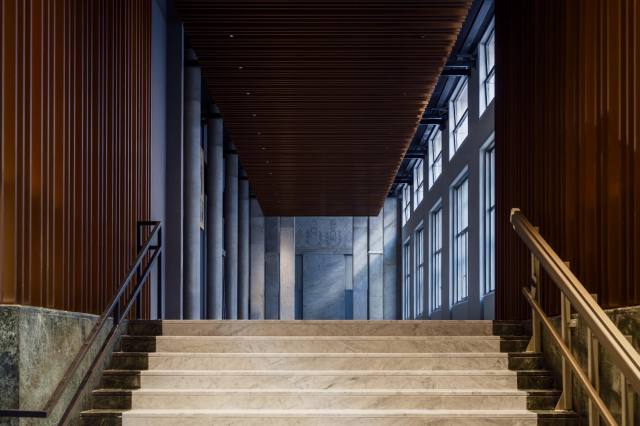
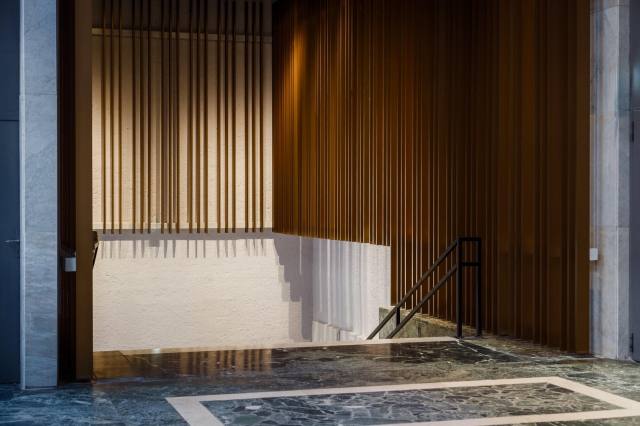
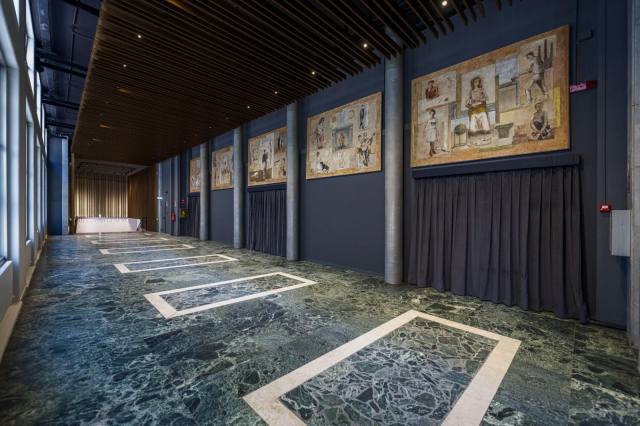
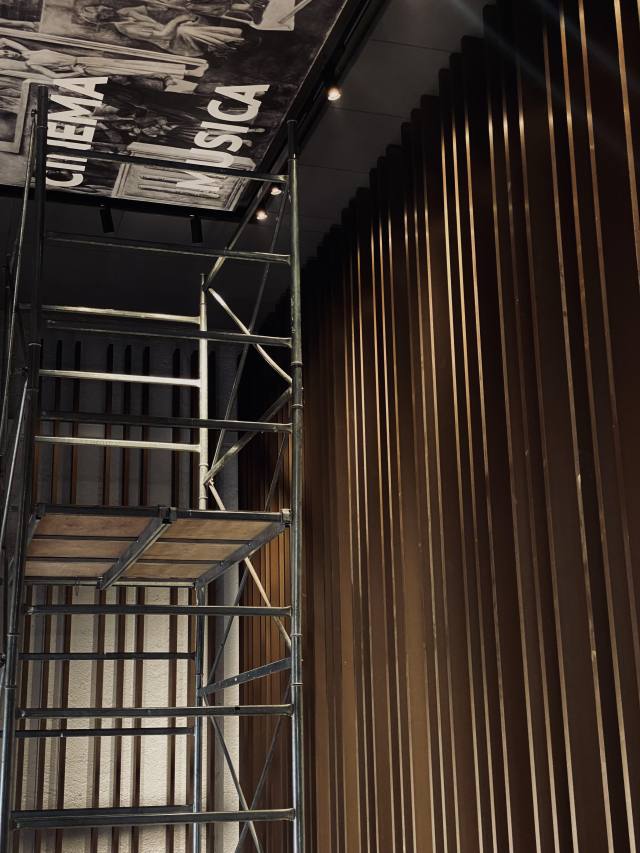
Light permeates and builds the environment in which everything takes shape, but within public and theatrical contexts the same light must acquire the meaning of accompaniment and be flexible on request.
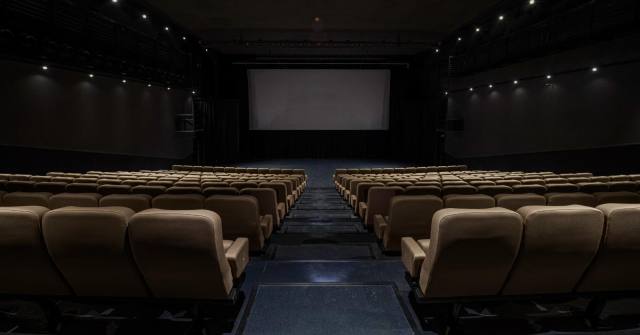
In a theater, the consolidated rule for lighting (not on stage) is to be able to continuously and gradually adjust the intensity of the lighting fixtures before turning them off completely during the performance. This flexibility, in addition to giving spectators time to settle into a seat to watch the film, gradually accustoms their eyes to the dimmed light of the projection and, ultimately, leads them to better appreciate the projection itself.
It must be a light that does not dazzle the spectator and that does not make him feel completely alone in the darkness of the room, he must always perceive the way out even during the show and not only at the end of the performance.
ph Matteo Mottari
| zoom |

| zoom |

| zoom |
| zoom |
| zoom |

| zoom |

| zoom |
| zoom |

| zoom |

| zoom |
| zoom |

| zoom |

Other achievements by Luxfabrica.
Discover them all and be inspired.
Other achievements by Luxfabrica.
Discover them all and be inspired.
Necessary cookies, session | ||||
| Name | Domain | Duration | Purpose | Policy |
| LUXFABRICA_CookieConsent | www.luxfabrica.eu | 6 months | To store cookie consent preferences. | Cookie policy |
| Name | LUXFABRICA_CookieConsent | |||
| Domain | www.luxfabrica.eu | |||
| Duration | 6 months | |||
| Purpose | To store cookie consent preferences. | |||
| Policy | Cookie policy | |||
Analytic cookies of third parties with anonimous IP | ||||
| Name | Domain | Duration | Purpose | Policy |
| _ga | luxfabrica.eu | 2 years | To store and count pageviews. | Cookie policy |
| Name | _ga | |||
| Domain | luxfabrica.eu | |||
| Duration | 2 years | |||
| Purpose | To store and count pageviews. | |||
| Policy | Cookie policy | |||
| _ga_* | luxfabrica.eu | 2 years | To store and count pageviews. | Cookie policy |
| Name | _ga_* | |||
| Domain | luxfabrica.eu | |||
| Duration | 2 years | |||
| Purpose | To store and count pageviews. | |||
| Policy | Cookie policy | |||


| Change your cookies preferences |
|

|
Necessary cookies, session |
|
|
Analytic cookies of third parties with anonimous IP |
